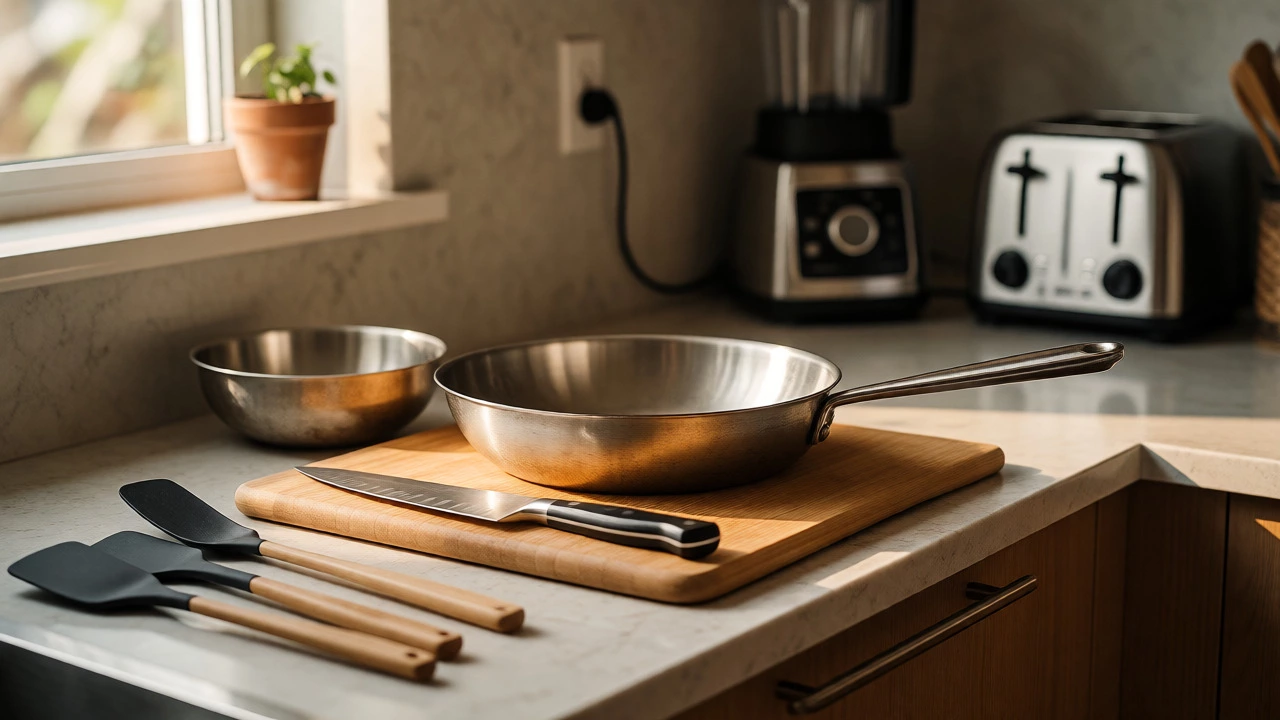
Kitchenware Classification Checker
Confused about whether that new gadget counts as "kitchenware"? Use this checker to classify common household items based on the practical definitions outlined in the guide.
Click an item on the left to see its classification.
Key Definitions:
- Kitchenware: Manual tools for prep, cooking, serving (e.g., Whisk, Knife, Plate).
- Appliance: Requires electricity/gas to transform food state (e.g., Toaster, Blender).
- Neither: Decorative or non-food related items (e.g., Vase, Lamp).
You walk into a store or scroll through an online catalog, and you see thousands of items: spatulas, pots, blenders, knives, cutting boards. They all sit under one umbrella term-kitchenware. But what does that word actually mean beyond being a catch-all label for things in your kitchen? Is it just about cooking? Does it include the cleaning supplies under the sink? If you've ever wondered where the line is drawn between "kitchenware" and "home decor," you're not alone.
The confusion often stems from how retailers use the term versus how chefs or designers define it. For most people, kitchenware is simply anything used to prepare, serve, or eat food. But there’s nuance here that affects how you shop, how you organize your space, and even how you tax certain business expenses if you run a catering gig. Let’s break down exactly what constitutes kitchenware, why the distinction matters, and how to identify what belongs in this category.
Defining Kitchenware: More Than Just Pots and Pans
At its core, kitchenware refers to the durable goods and utensils used for the preparation, cooking, serving, and storage of food within a kitchen environment. Unlike consumables like spices or flour, kitchenware is reusable equipment designed to facilitate culinary tasks. It is distinct from appliances, which require electricity or gas to function, though the two categories often overlap in retail sections.
Think of it this way: if it plugs into a wall, it’s usually an appliance. If it sits on the counter or hangs on a hook waiting for your hand, it’s likely kitchenware. This includes everything from the whisk you use to beat eggs to the ceramic bowl you serve salad in. The key attribute here is functionality related to food handling. A decorative vase on the counter isn’t kitchenware; a colander draining pasta is.
This definition helps clarify why some items are grouped together while others aren’t. For instance, a blender is technically an electrical appliance, but many retailers list it under kitchenware because it’s essential for food prep. However, strict industry definitions often separate "small appliances" from "cookware" and "tableware." Understanding these sub-categories prevents you from buying the wrong thing when you’re looking for a specific tool.
The Three Main Pillars of Kitchenware
To truly grasp the meaning of kitchenware, you need to look at its three primary sub-categories. Each serves a different purpose in the culinary workflow, and mixing them up can lead to inefficient shopping.
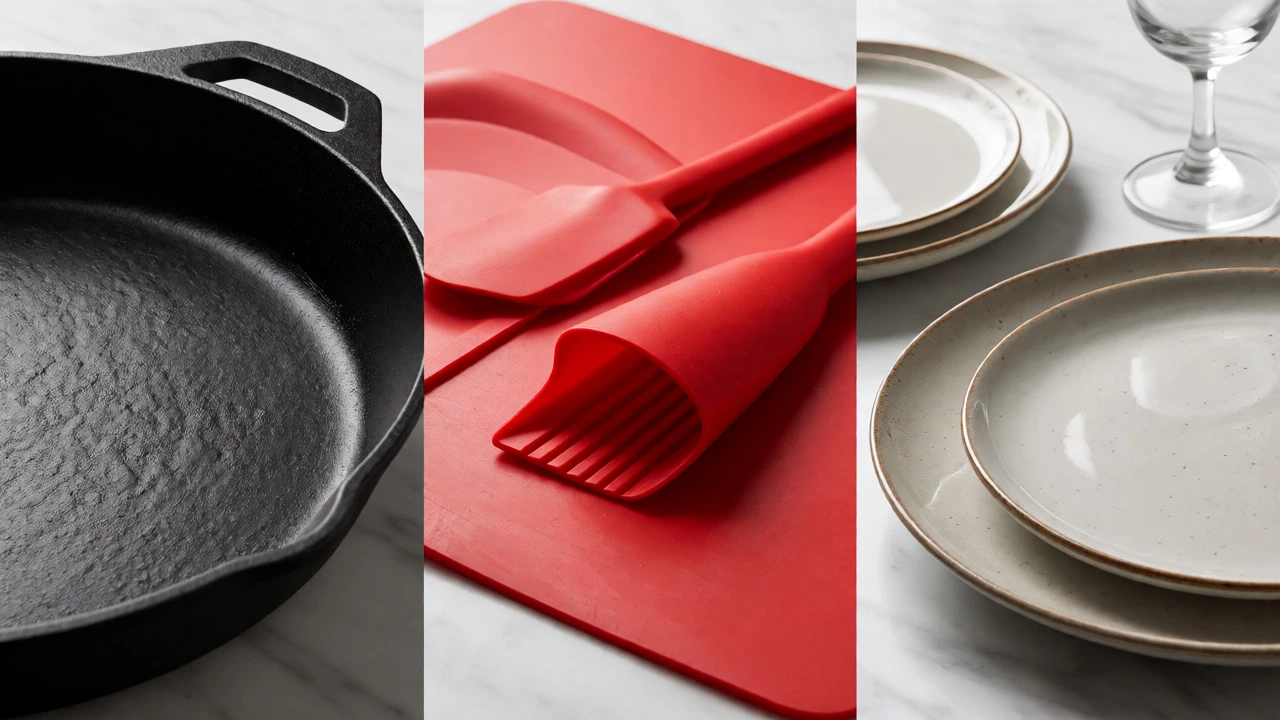
- Cookware: This includes pots, pans, baking sheets, and roasting dishes. These items come into direct contact with heat sources (stovetops, ovens). Their defining characteristic is heat resistance and thermal conductivity. Materials like stainless steel, cast iron, and non-stick coatings are common here.
- Preparation Tools (Utensils): These are the hands-on instruments: knives, peelers, graters, mixing bowls, measuring cups, and spoons. You don’t leave these on the stove; you hold them. Precision and ergonomics matter more than heat tolerance for most of these items.
- Tableware and Serveware: Once the food is cooked, it needs to be presented and eaten. Plates, glasses, cutlery, serving platters, and wine openers fall into this bucket. While they don’t touch raw ingredients during prep, they are integral to the dining experience.
Notice how each pillar requires different care. You scrub cookware to remove burnt bits, wash prep tools to prevent cross-contamination, and handle tableware carefully to avoid chipping. Recognizing these groups helps you understand why a "kitchenware set" might feel unbalanced if it’s heavy on plates but light on quality knives.
Kitchenware vs. Appliances: Where’s the Line?
This is the most common point of confusion. If you buy a toaster, is that kitchenware? Technically, no. It’s a small appliance. But if you buy a manual bread slicer, that’s kitchenware. Why? Because the toaster uses energy to transform the state of the food (heating), while the slicer merely changes its physical form through human effort.
However, the market blurs these lines. Big-box stores often have a single "Kitchen & Dining" section. Here’s a quick heuristic to tell them apart:
| Feature | Kitchenware | Appliance |
|---|---|---|
| Power Source | Manual/Human-powered | Electric/Gas/Battery |
| Lifespan | Years to Decades (with care) | 5-10 Years (typical warranty) |
| Maintenance | Washing, oiling, sharpening | Filter changes, repairs, part replacements |
| Examples | Whisk, Skillet, Knife, Plate | Mixer, Oven, Coffee Maker, Blender |
Why does this distinction matter? Cost and durability. High-quality kitchenware, like a cast-iron skillet, can last a lifetime and increase in value. Appliances depreciate rapidly. If you’re budgeting for a new kitchen, prioritize investing in durable kitchenware first, as appliances are easier to replace later.

Materials Matter: What Are Kitchenware Items Made Of?
The meaning of kitchenware also extends to the materials used, which dictate safety and performance. Not all metal is created equal, and plastic isn’t always safe for hot foods.
Stainless Steel is the gold standard for cookware and prep tools due to its corrosion resistance and lack of reactivity with acidic foods like tomatoes or lemon juice. It doesn’t leach chemicals into your food, making it a healthy choice.
Silicone has revolutionized kitchenware in recent years. It’s flexible, heat-resistant up to roughly 450°F (230°C), and easy to clean. You’ll find silicone in spatulas, baking mats, and collapsible strainers. Its main advantage is that it won’t scratch non-stick pans, unlike metal utensils.
Bamboo is popular for cutting boards and utensils because it’s naturally antimicrobial and renewable. However, bamboo requires regular oiling to prevent cracking. It’s not suitable for dishwasher cleaning, which limits its convenience for busy households.
When choosing kitchenware, ask yourself: Will this material react with my food? Can I put it in the dishwasher? Does it conduct heat evenly? These questions help you filter out poor-quality items that might warp, rust, or stain quickly.
Why Understanding Kitchenware Helps You Shop Smarter
Knowing the precise definition saves money. Retailers often bundle cheap, low-grade items under the guise of "essential kitchenware sets." A $50 set might include ten pieces, but only two might be usable. By understanding that true kitchenware focuses on utility and durability, you can pick items individually based on need rather than volume.
For example, do you really need a garlic press if you have a good chef’s knife? Many professional cooks argue that the knife is faster and cleans easier. The press is kitchenware, yes, but is it necessary? Often, no. Prioritizing high-impact items-like a sharp knife, a heavy-bottomed pan, and reliable mixing bowls-gives you better results than owning every gadget imaginable.
Additionally, understanding kitchenware helps with organization. Grouping items by function (prep vs. cook vs. serve) rather than material makes your kitchen more efficient. Keep your prep tools near the cutting board, cookware near the stove, and tableware near the dishwasher. This logical flow reduces steps and keeps your workspace clear.
Is dinnerware considered kitchenware?
Yes, dinnerware is generally considered a subset of kitchenware, specifically falling under the category of tableware. While some strict culinary definitions separate "cooking tools" from "dining ware," in retail and general household contexts, plates, bowls, and mugs are sold and managed as part of the overall kitchen inventory.
What is the difference between kitchenware and housewares?
Housewares is a broader category that includes kitchenware but also encompasses cleaning supplies, laundry accessories, and home maintenance tools. Kitchenware is strictly limited to items used for food preparation, cooking, and serving. All kitchenware is housewares, but not all housewares are kitchenware.
Are kitchen gadgets considered kitchenware?
Absolutely. Gadgets like avocado slicers, egg separators, and herb scissors are specialized kitchenware. They serve specific functions in food preparation. While some may be redundant, they fit the definition of reusable tools used to handle food.
How long should kitchenware last?
High-quality kitchenware should last anywhere from 5 to 20+ years depending on the material and usage. Cast iron skillets can last generations if maintained properly. Non-stick pans typically last 3-5 years before the coating degrades. Stainless steel and glass items can last indefinitely unless broken or severely scratched.
Can I donate old kitchenware?
Yes, many charities accept gently used kitchenware, provided it is clean and free of major defects like deep cracks or peeling non-stick coatings. Check with local shelters or thrift stores first, as policies vary. Items with significant wear are often recycled rather than resold.