
Mirror Accuracy & Distortion Simulator
Explore how manufacturing choices impact what you see in the mirror. Adjust the settings below to visualize distortions like rippling (wave) and color shifts.
Analysis Report
Accuracy Rating: Calculating...
- Color Tint: Checking...
- Wave Distortion: Checking...
- Ghosting: Checking...
Have you ever looked into a bathroom mirror and felt like your face was slightly distorted, or noticed that a full-length mirror made your legs look shorter than they actually are? It’s a frustrating experience. You want to see yourself clearly, but many mirrors on the market bend reality just enough to throw off your perception. The core problem isn't your eyes; it's the glass itself. Most standard mirrors use a technique called silvering that can introduce subtle waves and ripples, especially in larger panels. To find the most accurate mirror, you need to understand what causes these distortions and how specific manufacturing techniques fix them.
This guide breaks down the science behind mirror accuracy, compares different types of glass, and gives you practical tips for testing any mirror before you buy it. Whether you’re setting up a vanity, dressing room, or just want to stop guessing how you look in public, this information will help you make a smarter choice.
The Science of Distortion: Why Mirrors Lie
To understand accuracy, we first have to look at why mirrors fail. A standard mirror consists of a sheet of glass with a thin layer of reflective metal (usually aluminum or silver) applied to the back. The issue arises during the cooling process after the glass is poured. If the glass cools unevenly, internal stresses remain in the material. These stresses cause the surface to warp minutely. While invisible to the naked eye when looking at an object from a distance, these micro-warps become obvious when reflecting a human face, which has complex curves and details.
There are two main types of distortion you’ll encounter:
- Wave distortion: This creates a rippling effect, often seen in large floor mirrors. It makes straight lines look wavy.
- Cylindrical distortion: This happens when the mirror is slightly curved, either convex (bulging out) or concave (curving in). Convex mirrors make you look thinner but smaller; concave mirrors magnify certain features.
The goal of an accurate mirror is to achieve zero parallax error and zero wave distortion. This means the reflection should match the real-world object exactly in size, shape, and proportion.
Silvered vs. First-Surface Mirrors
The biggest factor in mirror accuracy is where the reflective coating sits. Most household mirrors are Second-Surface Mirrors. In these, the glass is in front of the reflective layer. Light passes through the glass, hits the metal, reflects back, and passes through the glass again. Because light refracts (bends) as it enters and exits the glass, any imperfections in the glass thickness or parallelism cause double images or color fringing. This is why you sometimes see a faint ghost image behind your main reflection in cheap mirrors.
In contrast, First-Surface Mirrors have the reflective coating on the very front of the glass. The light hits the metal immediately and bounces back without passing through the glass substrate. This eliminates refraction errors entirely. However, first-surface mirrors are expensive because the reflective coating is exposed and easily scratched. They are typically used in laboratories, telescopes, and high-end photography studios. For home use, they are rarely necessary unless you are doing precise optical work.
For the average person seeking a clear, undistorted view, the quality of the glass substrate matters more than whether it is first-surface or second-surface. A high-quality second-surface mirror with premium float glass will outperform a low-quality first-surface mirror with warped backing.
Float Glass: The Gold Standard for Home Use
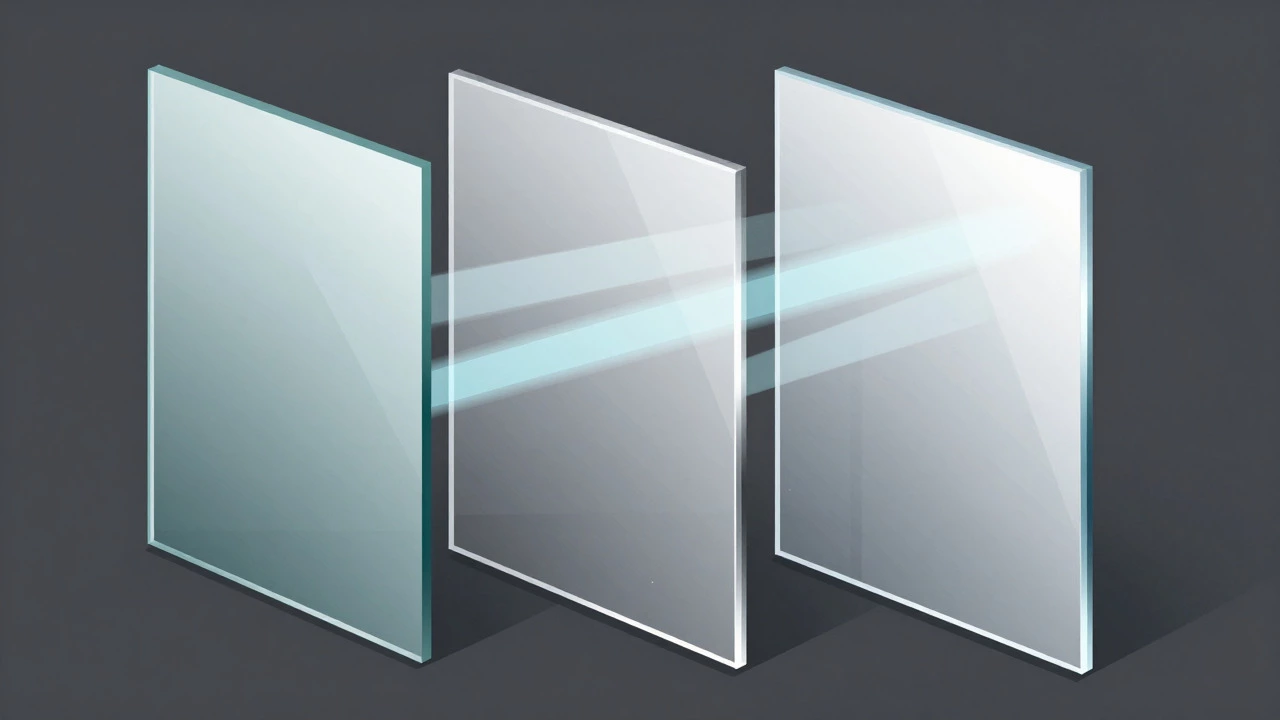
If you are buying a mirror for your bedroom or bathroom, you want to ask for Float Glass. This is the industry standard for high-clarity mirrors. Float glass is manufactured by pouring molten glass onto a bed of liquid tin. As it cools, the surface becomes perfectly flat and smooth. Unlike older methods where glass was rolled or polished, float glass has no visible streaks or bubbles.
Not all float glass is created equal. Look for terms like "low-iron" or "optical grade." Standard float glass contains iron impurities that give it a greenish tint. This tint can slightly alter how colors appear in your reflection, making skin tones look less vibrant. Low-iron glass removes most of these impurities, resulting in a clearer, more neutral reflection. While the difference is subtle, if you are sensitive to color accuracy, low-iron float glass is the best choice for a truly accurate mirror.
How to Test Mirror Accuracy Before Buying
You don’t need a laser level to check if a mirror is accurate. Here are three simple tests you can do in-store or at home:
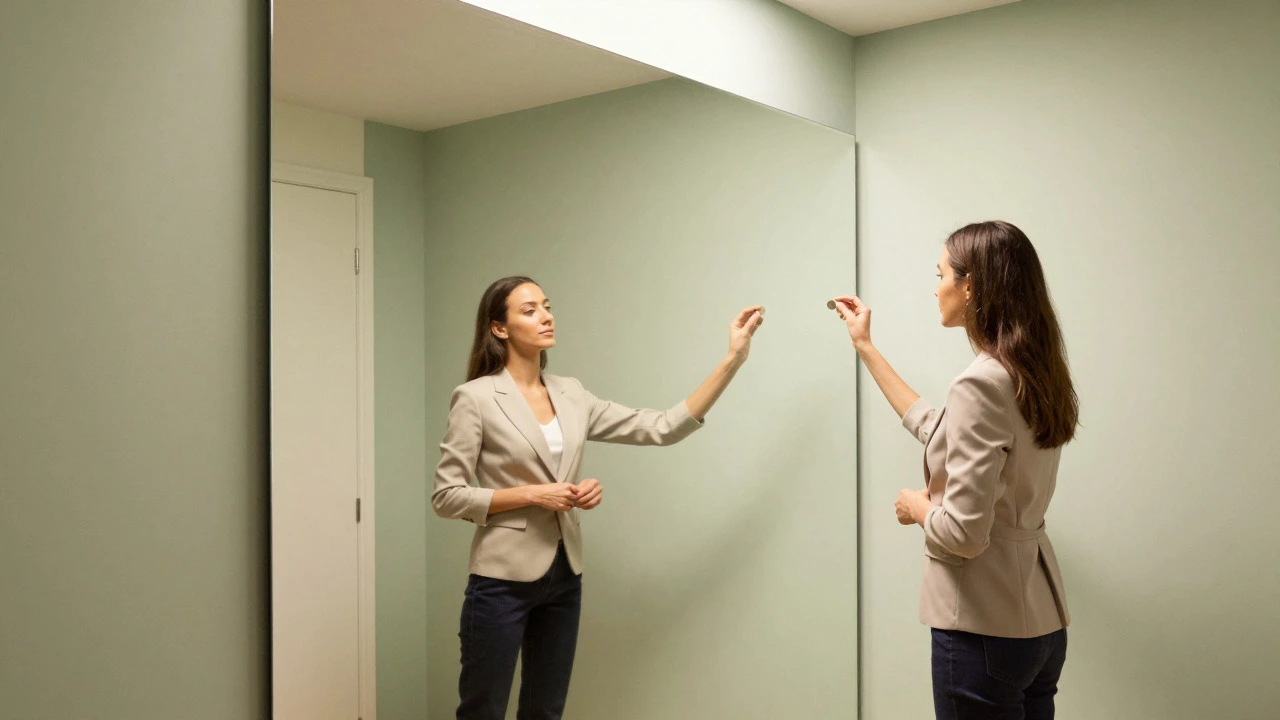
- The Coin Test: Hold a coin against the mirror at various angles. If you see a single, sharp reflection of the coin, the glass is likely uniform. If you see a double image or a blurry halo, the glass thickness is inconsistent.
- The Straight Line Check: Stand next to a vertical edge, like a door frame or wall corner. Look at your reflection. Does the line of the door frame appear straight in the mirror? If it looks bent or wavy, the mirror has significant wave distortion.
- The Face Profile Test: Turn your head slowly from left to right while looking at your profile. Watch the transition between your nose and cheek. In an inaccurate mirror, this transition may jump or blur. In an accurate mirror, the movement should be smooth and continuous.
Also, pay attention to the edges. Many budget mirrors have unpolished edges that can chip over time. Polished edges not only look better but also indicate a higher quality finishing process, which often correlates with better glass stability.
Comparing Mirror Types for Accuracy
To help you decide, here is a comparison of common mirror types based on their potential for accuracy and typical use cases.
| Mirror Type | Accuracy Level | Best For | Key Limitation |
|---|---|---|---|
| Standard Silvered Glass | Low to Medium | Budget bathrooms, decorative accents | Green tint, potential wave distortion, ghosting |
| Float Glass (Standard) | High | Dressing rooms, vanities, general home use | Slight green tint remains in thick panels |
| Low-Iron Float Glass | Very High | Makeup application, professional grooming | Higher cost, heavier weight |
| First-Surface Optical | Extreme | Laboratories, telescopes, precision art | Very expensive, fragile coating, difficult to clean |
For most people, Low-Iron Float Glass offers the best balance of price and performance. It provides a crisp, color-true reflection without the steep price tag of laboratory-grade optics.
Common Myths About Mirror Accuracy
There are several myths circulating online that confuse buyers. Let’s clear them up.
Myth 1: Bigger mirrors are always more accurate. Actually, larger mirrors are harder to manufacture accurately. The sheer size of the glass increases the risk of warping during cooling. A small, high-quality mirror is often more accurate than a large, mass-produced one. If you need a large mirror, ensure the manufacturer uses tempered or annealed float glass specifically rated for large formats.
Myth 2: Anti-fog coatings reduce clarity. Modern anti-fog coatings are microscopic and do not affect optical clarity. They simply prevent water droplets from forming. Unless the coating is peeling or damaged, it won’t make your reflection blurry.
Myth 3: LED lights change mirror accuracy. Lighting affects how you *see* yourself, but it doesn’t change the mirror’s physical properties. However, poor lighting can hide distortions. Ring lights or even, diffused lighting reveal flaws better than harsh overhead spotlights. Always test a mirror under good, natural light if possible.
Choosing the Right Mirror for Your Space
Your choice depends on where you’ll use the mirror. For a bathroom, prioritize moisture resistance and ease of cleaning. A standard float glass mirror with a good anti-fog treatment is sufficient. For a bedroom or dressing area, invest in a larger panel with low-iron glass. This ensures that when you get ready in the morning, you see your clothes and makeup as others will see them.
If you are an artist or photographer, consider a portable mirror with a collapsible stand. These are often made with lower-grade glass, so check the specifications carefully. Alternatively, buy a separate high-quality handheld mirror for detail work and a larger mirror for overall framing.
Remember, the most accurate mirror is one that matches your specific needs. You don’t need laboratory-grade optics to look your best. You just need glass that is flat, clear, and free of internal stress.
Frequently Asked Questions
Why does my bathroom mirror make me look different than other mirrors?
This is usually due to wave distortion in the glass. If the mirror was cooled unevenly during manufacturing, the surface isn't perfectly flat. This bends light rays, altering the shape of your reflection. Lighting conditions also play a huge role; harsh shadows can exaggerate facial features in one mirror but not another.
Is a first-surface mirror worth the extra cost for home use?
For most homes, no. First-surface mirrors eliminate ghosting but are extremely fragile and expensive. A high-quality low-iron float glass mirror will provide 95% of the visual accuracy for 10% of the price. Only consider first-surface mirrors if you are doing scientific work or professional photography where every micron matters.
How can I tell if a mirror is made of low-iron glass?
Look at the edges of the mirror. Standard glass has a distinct green tint along the cut edges. Low-iron glass appears nearly transparent or very pale yellow/green. You can also hold the mirror up to a bright light; low-iron glass transmits more light, appearing clearer.
Do smart mirrors with built-in screens have accurate reflections?
It depends on the brand. Many smart mirrors use standard glass with a digital display embedded behind the reflective layer. If the glass is high-quality float glass, the reflection will be accurate. However, some cheaper models use thinner glass that may warp. Check reviews for specific models regarding 'distortion' or 'warping' before purchasing.
What is the best way to clean a mirror to maintain its clarity?
Use a microfiber cloth and a solution of distilled water and white vinegar (50/50 mix). Avoid paper towels, which can leave lint and scratch the surface. Wipe in a circular motion to avoid spreading dirt. Dry thoroughly to prevent water spots, which can create temporary visual distortions.