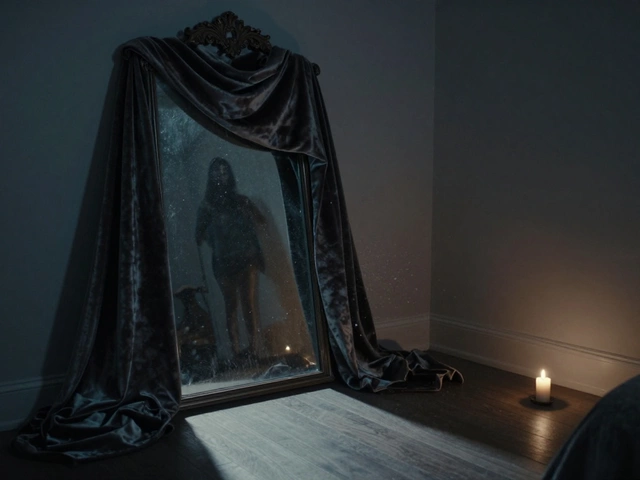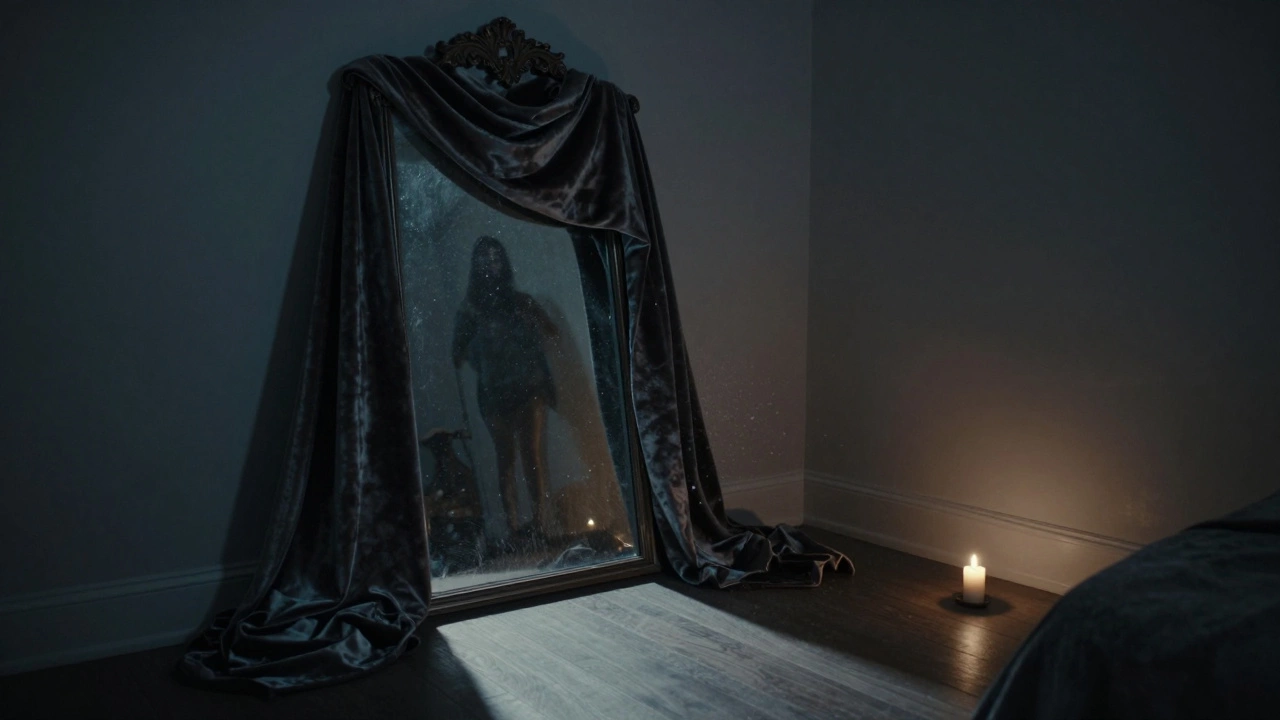
Most people glance at their reflection without a second thought. But for some, looking into a mirror triggers a sudden chill, a racing heart, or the urge to look away-fast. This isn’t just about bad lighting or a bad hair day. There’s a real, documented fear of mirrors called spectrophobia an intense, irrational fear of mirrors or one’s own reflection. And it’s more common than you think.
What Exactly Is Spectrophobia?
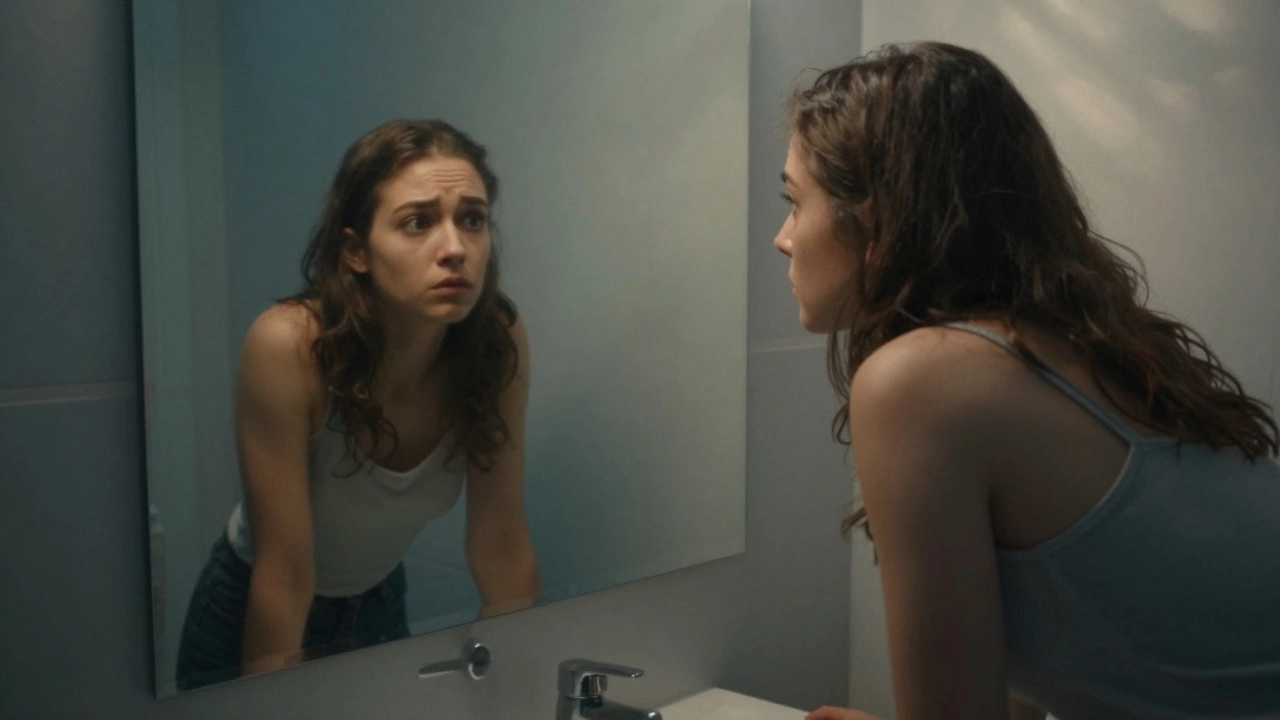
Spectrophobia isn’t just discomfort. It’s a specific phobia, classified under anxiety disorders. People with this fear don’t just dislike mirrors-they experience panic attacks, dizziness, nausea, or even hyperventilation when confronted with their reflection. Some avoid rooms with mirrors entirely. Others can’t sleep unless all reflective surfaces are covered. The fear isn’t about vanity. It’s about what the reflection might represent.
Studies from the University of Auckland’s Department of Clinical Psychology in 2023 found that 12% of adults surveyed reported at least one episode of extreme discomfort around mirrors in the past year. Of those, 3% met clinical criteria for spectrophobia. That’s roughly 1 in 30 people. The numbers are higher among teens and people who’ve experienced trauma.
Why Do Mirrors Trigger This Fear?
At first glance, a mirror is just glass and metal. But psychologically, it’s something far stranger. It shows you a version of yourself that’s not really there. It’s a live, uncontrolled copy. You move, and it moves. You blink, and it blinks. It’s perfect-but not alive. That uncanny resemblance is what unsettles the brain.
Neuroscientists call this the uncanny valley effect applied to self-perception. When something looks almost human but isn’t quite, the brain glitches. It doesn’t know whether to trust what it’s seeing. For people with anxiety, this triggers a primal question: Is that really me? Or is something else behind the glass?
Historical myths amplify this. In medieval Europe, mirrors were believed to trap souls. In Victorian times, people covered mirrors after a death to prevent the spirit from getting stuck. In Japanese folklore, staring into a mirror at midnight could show your future self-or a demon. These stories aren’t just old wives’ tales. They’re cultural echoes of a deep-seated unease.
Connection to Trauma and Identity
For many, spectrophobia isn’t about mirrors. It’s about what the mirror reveals. People who’ve experienced abuse, bullying, or body dysmorphia often report mirror avoidance. A reflection can become a reminder of shame, pain, or loss of control.
One 2022 case study from a clinic in Wellington followed a 24-year-old woman who developed mirror fear after a car accident. She saw her own face in the shattered windshield-bruised, swollen, unrecognizable. Weeks later, she couldn’t look at any reflective surface. Her brain had linked the mirror to the trauma. Therapy focused not on removing mirrors, but on rebuilding her sense of self outside of reflection.
Similarly, people with gender dysphoria sometimes avoid mirrors because their reflection doesn’t match their internal identity. The mirror doesn’t lie-but it doesn’t affirm either. That dissonance can be unbearable.
Superstitions and Cultural Beliefs
Even if you don’t believe in ghosts, you’ve probably heard the warnings: don’t look in a mirror at midnight, don’t have mirrors facing beds, don’t break a mirror. These aren’t random. They’re deeply embedded in global folklore.
- In Chinese tradition, mirrors reflect yin energy-too much can drain life force.
- In parts of Eastern Europe, mirrors are turned to face the wall during funerals to keep the soul from escaping.
- Some Native American tribes believe mirrors show not just your face, but your spirit-and if you stare too long, you risk letting it out.
- In modern horror films, mirrors are used to hide monsters, doppelgängers, or alternate realities. Think of The Conjuring or Hereditary. These stories don’t come from nowhere-they tap into real, widespread unease.
These beliefs aren’t just superstition. They’re psychological coping mechanisms. When humans face the unknown, we create stories to explain it. The mirror, with its silent, perfect copy of us, is one of the most mysterious things in our homes.
Is It Just in Your Head?
Yes-and no. The fear is real. The trigger is psychological. But the mirror itself? It’s just a tool. It doesn’t have power. It doesn’t move on its own. It doesn’t show ghosts.
Yet, the brain doesn’t care about logic. It responds to patterns, emotion, and memory. If your brain has learned that mirrors = danger, then even a well-lit bathroom mirror can feel threatening. That’s why simply telling someone to “get over it” rarely works.
Treatment for spectrophobia usually involves exposure therapy. Not by staring into a mirror for hours. But by slowly reintroducing reflection in safe, controlled ways. Start with a small, dimly lit mirror. Then move to a mirror in daylight. Then a full-length one. With support, most people reduce their fear within 8-12 weeks.
What About Children?
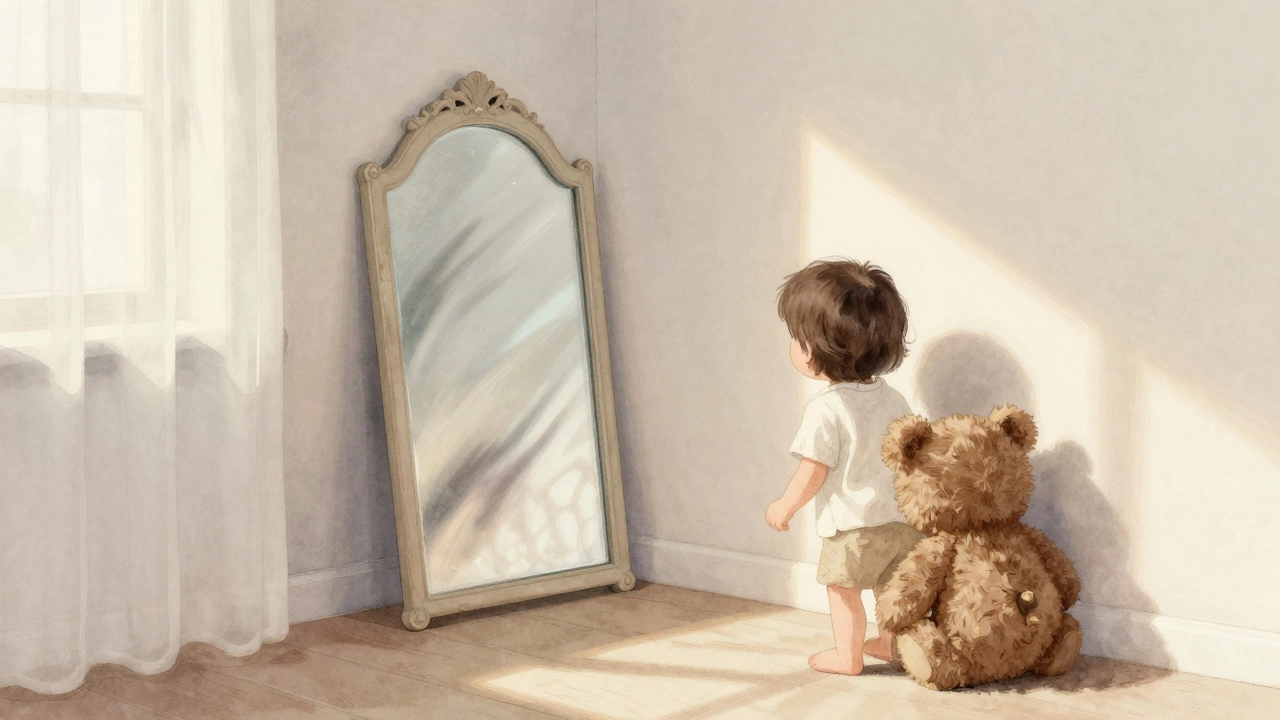
Young kids often go through a phase where they don’t recognize themselves in mirrors. Around 18 months, most toddlers begin to understand that the reflection is them. But for some, this moment isn’t exciting-it’s terrifying. They scream, cry, or run away. This isn’t phobia. It’s normal developmental confusion.
But if the fear lasts past age 5, or is paired with anxiety, sleep issues, or social withdrawal, it may be more serious. Parents shouldn’t force a child to look. Instead, they can use storytelling: “Look, the mirror is like a window. It shows you, but it’s not real. You’re still here, and you’re safe.”
When Should You Seek Help?
You don’t need to be terrified of mirrors to benefit from support. If you:
- Avoid bathrooms, dressing rooms, or cars because of reflections
- Feel panicked when you see your reflection unexpectedly
- Have trouble sleeping because you fear what might appear in a mirror at night
- Feel disconnected from your own body when looking in glass
-then it’s time to talk to a therapist. This isn’t weakness. It’s your mind trying to protect you from something it doesn’t understand. And understanding is the first step to healing.
Can You Live Without Mirrors?
Some people try. They cover mirrors with cloth, remove them from homes, or use matte surfaces instead. But isolation doesn’t fix the fear. It feeds it. The goal isn’t to remove mirrors. It’s to reframe them.
One woman in Christchurch, after years of avoiding mirrors, started using them as part of her mindfulness practice. She’d stand in front of one, breathe, and say aloud: “This is my body. This is my face. I am here.” She didn’t love it. But over time, the fear lost its grip.
It’s not about liking your reflection. It’s about reclaiming control over what it means.
Final Thought: Mirrors Don’t Lie-But They Don’t Tell the Whole Story
A mirror shows your face. It doesn’t show your courage. It doesn’t show your tears, your laughter, your quiet strength. It’s just a surface. But because we’re human, we project everything onto it-our fears, our hopes, our ghosts.
Maybe the real fear isn’t of the mirror. It’s of what we’re afraid to see in ourselves.
Is fear of mirrors a real phobia?
Yes. It’s called spectrophobia and is recognized in the Diagnostic and Statistical Manual of Mental Disorders (DSM-5) as a specific phobia. It’s rare but documented, with symptoms including panic, avoidance, and physical reactions like sweating or trembling when near mirrors.
Can children grow out of being scared of mirrors?
Many do. Around age 2, children start recognizing their reflection. For some, this moment causes fear, which fades naturally. But if the fear persists past age 5 or is paired with anxiety, sleep problems, or social withdrawal, professional support may help.
Why do horror movies use mirrors so often?
Because mirrors tap into a primal unease. They show a perfect copy of you, but it’s not real. That uncanny resemblance makes them perfect for stories about doppelgängers, possession, or alternate realities. They’re not scary because they’re supernatural-they’re scary because they’re too real.
Is there a link between mirror fear and mental health conditions?
Yes. Spectrophobia often overlaps with body dysmorphic disorder, PTSD, anxiety disorders, and gender dysphoria. In these cases, the mirror doesn’t cause the fear-it reflects it. Treatment focuses on the root condition, not just the mirror avoidance.
Can you treat spectrophobia without medication?
Absolutely. Cognitive behavioral therapy (CBT) and exposure therapy are the most effective non-medication treatments. Gradual, controlled exposure to mirrors-starting with small, dim reflections and moving to full views-helps the brain relearn that mirrors aren’t dangerous. Support from a therapist makes this process much more effective.